 In-House Quality Control
  Manufactured in Spain, India & Vietnam
  Miami-Based Logistics


Porcelain tile is a leading choice for flooring due to its durability, low porosity, and timeless appearance. Understanding how to clean porcelain tile correctly helps prevent dullness, residue buildup, and surface damage over time. Even though porcelain tile is an easy-to-maintain resilient surface, it still requires proper care to maintain its finish and longevity.
This step-by-step guide details approved cleaning methods suitable for porcelain tile installed in both residential and commercial spaces.
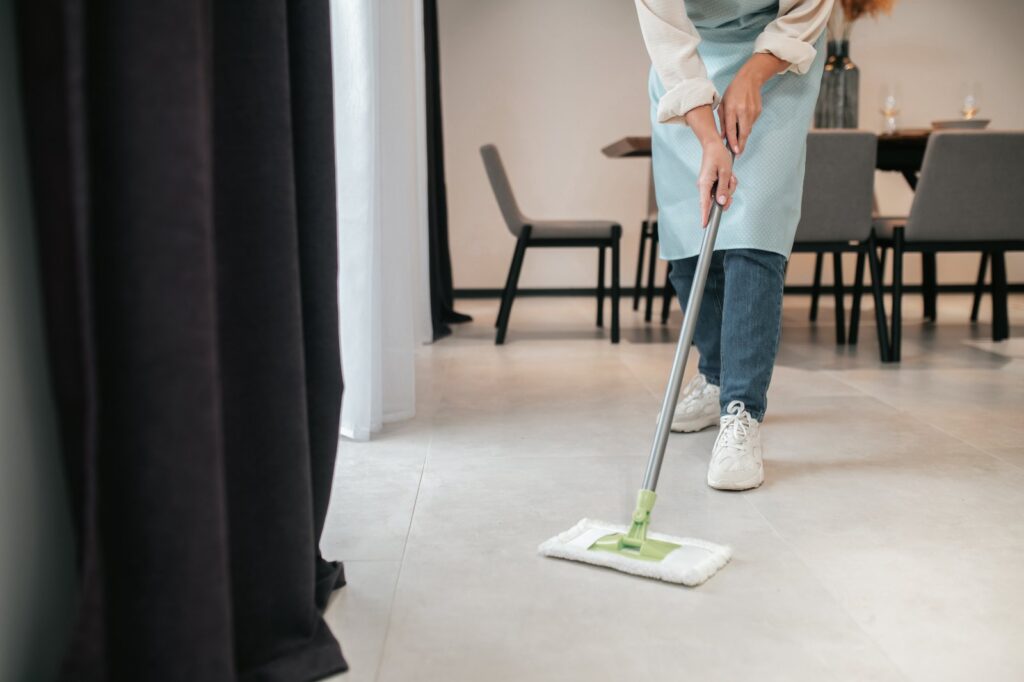
Tools and Products You’ll Need
Before beginning, you’ll need to gather the right tools for safe and effective cleaning. This includes:
- A soft-bristle broom or vacuum
- Microfiber mop
- Bucket
- Warm water
- A pH-neutral tile cleaner
Choosing the best cleaner for porcelain tile is critical. Avoid acidic or abrasive products because they can degrade the surface finish. These basic tools are all you need to effectively clean your porcelain tiles.
Step 1: Dry Sweep the Surface
Always begin by removing loose dirt and debris. This step is an essential porcelain tile cleaning tip. Dry sweeping prevents fine particles from scratching the tile during wet cleaning. To sweep, use a soft broom or a vacuum designed for hard floors. Be sure to pay close attention to corners and grout lines where dust often accumulates.
Step 2: Apply a Mild Cleaner
Mix a pH-neutral cleaner with warm water, following the manufacturer’s instructions. Then dampen a microfiber mop and clean the floor using even strokes. Avoid soaking the tile since excess water can leave residue or seep into the grout. Using a mild solution is the safest approach for cleaning porcelain tile without causing damage.
Step 3: Rinse and Dry the Floor
After cleaning, wipe the surface with clean water and the mop to remove any remaining cleaner. This prevents streaks and residue buildup. Dry the floor thoroughly using a clean microfiber cloth or towel. Proper drying the floor gives it a nice shine and reduces the risk of water spots, especially on polished or glazed finishes.
Step 1: Dry Sweep the Surface
Always begin by removing loose dirt and debris. This step is an essential porcelain tile cleaning tip. Dry sweeping prevents fine particles from scratching the tile during wet cleaning. To sweep, use a soft broom or a vacuum designed for hard floors. Be sure to pay close attention to corners and grout lines where dust often accumulates.
Step 2: Apply a Mild Cleaner
Mix a pH-neutral cleaner with warm water, following the manufacturer’s instructions. Then dampen a microfiber mop and clean the floor using even strokes. Avoid soaking the tile since excess water can leave residue or seep into the grout. Using a mild solution is the safest approach for cleaning porcelain tile without causing damage.
Step 3: Rinse and Dry the Floor
After cleaning, wipe the surface with clean water and the mop to remove any remaining cleaner. This prevents streaks and residue buildup. Dry the floor thoroughly using a clean microfiber cloth or towel. Proper drying the floor gives it a nice shine and reduces the risk of water spots, especially on polished or glazed finishes.
Cleaning Glazed vs Unglazed Porcelain Tiles
Cleaning glazed porcelain tile is generally easier to do than unglazed porcelain tiles because the protective coating is stain and moisture resistant. Even though unglazed porcelain is highly durable, it tends to be more prone to surface residue, requiring occasional sealing. Always follow manufacturer recommendations and use appropriate cleaning products based on the type of tile finish.
Mistakes to Avoid When Cleaning Porcelain
Avoid using vinegar, bleach, ammonia, or wax-based cleaners on your porcelain tiles. These products can dull the finish or leave slippery residue that can become a safety hazard. Be sure not to use steel wool or any abrasive scrubbers. These can cause permanent scratches. Consistent use of proper products and methods is the key to lasting appeal.
